
"processing station"
2000 article(s) found

Rwanda Coffee Malaba Coffee Flavor introduction to the characteristics of Rwandan Coffee in Chilmel Manor
The first problem for Malaba coffee farmers is to set up a cleaning station. The coffee fruit must be transported to the cleaning station to wash the sugar under the skin of the coffee bean within 12 hours after picking, otherwise the flavor of the coffee will be greatly damaged. In July 2001, with UNR, the Ministry of Culture and Industry of Rwanda (Office des Cultures Industrielles du Rwanda,OCIR-Caf), ACD

Introduction to the characteristics of Rwanda Coffee Bean Flavor Manor producing area Coffee growing Environment in Rwanda
Rwandans have been growing coffee since colonial times, but until 1999, its products were still classified as below Class C and were not popular in the global market. The reason for the poor quality is that farmers do not have a fixed procedure for washing coffee beans and do not process coffee fruits according to specifications in time. Buyers buy coffee beans at $0.33 per kilogram, and farmers keep warm by the meagre profits earned at low prices.

Rwanda Coffee Varieties Malaba Coffee Introduction
The first problem that Malaba coffee farmers solved was to set up a washing station. Coffee cherries must be transported to a washing station within twelve hours of picking to remove the sugar coating under the outer skin of the coffee beans, otherwise the flavor of the coffee will be greatly damaged. In July 2001, the Rwandan government, through UNR, the Office des Cultures Industrielles du Rwanda (OCIR-Caf), ACD,

Flavor characteristics of special washed Ugandan coffee in Yega Sheffield, SL14 species of the White Nile, Uganda
Professional coffee knowledge exchange more coffee bean information please follow the coffee workshop (Wechat official account cafe_style) Uganda White Nile SL14 species Yega Sheffield Special washing Origin: NEBBI,ZOMBO,UGANDA treatment Plant: WHITE NILE altitude: 1450m 1800m treatment: washing flavor: cherry, toffee, floral white Nile washing station was established in 201

For Rwandan coffee beans, it is better to buy raw beans or roasted beans.
Rwandans have been growing coffee since colonial times, but until 1999, its products were still classified as below Class C and were not popular in the global market. The reason for the poor quality is that farmers do not have a fixed procedure for washing coffee beans and do not process coffee fruits according to specifications in time. Buyers buy coffee beans at $0.33 per kilogram, and farmers keep warm by the meagre profits earned at low prices.

Description of bourbon Flavor and Baking suggestion of washing method in Rwanda Coffee Nyungwe Water washing Station
The exchange of professional baristas please pay attention to the coffee workshop (Wechat official account cafe_style). The deep-roasted coffee shows a solid sweetness of brown sugar, with the smell of Earl Grey Tea and five spices, and the fruit flavor is similar to carbonated drinks. Suitable for urban roasting slightly as deep as the whole city baking, but also suitable for brewing Italian espresso. Variety: bourbon grade: A1 raw bean treatment method: water

Simple treatment method for grindability and baking degree of water-washed bourbon boutique coffee beans in Muxiuyi treatment plant, Rwanda
Exchange of professional baristas Please pay attention to the coffee workshop (Wechat official account cafe_style) treatment: washed, elevated scaffolding sun-dried Rwandan coffee, like many African countries, is mainly produced by small farmers, and the ripe coffee cherries are collected and sent to the processing station during the harvest every year. The ripe coffee berries picked by farmers during the annual harvest period are concentrated at the treatment station.

Rwanda Coffee Flavor Manor with extreme Taste characteristics
The first problem for Malaba coffee farmers is to set up a cleaning station. The coffee fruit must be transported to the cleaning station to wash the sugar under the skin of the coffee bean within 12 hours after picking, otherwise the flavor of the coffee will be greatly damaged. In July 2001, with UNR, the Ministry of Culture and Industry of Rwanda (Office des Cultures Industrielles du Rwanda,OCIR-Caf), ACD

A brief introduction to the cultivation of boutique coffee beans in Chimeier Manor with a long aftertaste, geographical location, climate and altitude
Rwanda's economy is dominated by agriculture. The population engaged in agriculture and animal husbandry accounts for 92% of the country's population. The main cash crops are coffee, tea and cotton. Because it is an agricultural and animal husbandry country, coupled with the loss of many young workers caused by the genocide in 1994, it is a huge blow to a country that is not already rich, and Rwanda is still a backward country. Luwang after the Civil War
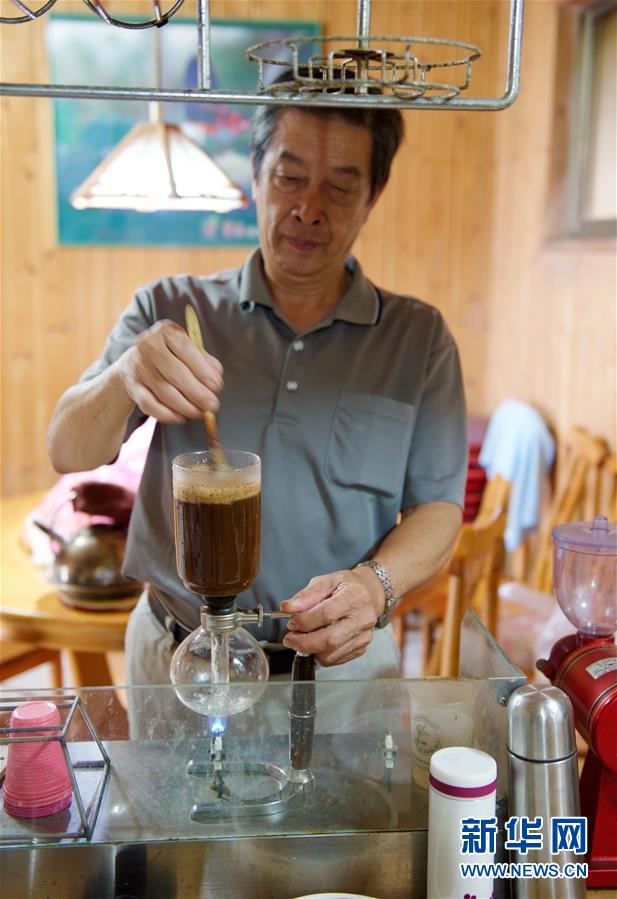
Huashan's "on Coffee"-- the price is not pursued by Baodao, a reporter of Xinhua News Agency stationed in Taiwan.
Liu Qingsong is checking the ripening of coffee beans (photo taken on November 20). Gukeng Township on the Tropic of Cancer, formerly known as an Gukeng, means a warm ancient nest. The altitude, rainfall and sunshine here are all suitable for the growth of coffee trees. As early as the Japanese occupation period, the Japanese initiated the cultivation of coffee. The coffee beans were roasted and extracted, and the coffee beans were sweet, fragrant and not bitter, with a unique flavor. As a result, Gukeng has become the temperature of coffee in Taiwan.

Introduction of Kimmel Manor in Lute Xilo, West Province of Malaba Coffee Coffee, Rwanda
The first problem for Malaba coffee farmers is to set up a cleaning station. The coffee fruit must be transported to the cleaning station to wash the sugar under the skin of the coffee bean within 12 hours after picking, otherwise the flavor of the coffee will be greatly damaged. In July 2001, with UNR, the Ministry of Culture and Industry of Rwanda (Office des Cultures Industrielles du Rwanda,OCIR-Caf), ACD

Nestle Coffee Center stationed in Pu'er Industrial Park
(Yunnan, December 12) after nearly 30 years of deep cultivation of Pu'er, the large-scale project of the Nestle Coffee Center officially entered the Pu'er Industrial Park today. The center will greatly enhance its ability to provide training and technical support to farmers and coffee workers, and further improve and promote the development of Pu'er coffee industry. Representatives of Pu'er Industrial Park and Nestle Company jointly signed a cooperation agreement in Pu'er. Nestle

Lishui Petroleum: Selling "Three Cups of Coffee"
Recently, Sinopec Zhejiang Petroleum Branch has carried out activities to refuel and deliver freshly ground coffee electronic coupons at designated points in the province, among which the Chengnan Gas Station of Lishui Petroleum Branch is one of them. During the event, the sales volume of freshly ground coffee increased significantly, and the exchange rate of coffee coupons exceeded 50%, 34 percentage points higher than the provincial average exchange rate. The first cup of coffee sets the mood. Chengnan Gas Station

What are the characteristics of Yega Xuefei Arica coffee? introduction to the flavor and taste of Arica coffee beans.
Professional coffee knowledge exchange more coffee bean information please follow the coffee workshop (Wechat official account cafe_style) Qianjie Coffee-Yegasheifi Arica Coffee introduction Yega Xuefei is a broad name, there are large and small producing areas, micro-production areas, cooperatives, processing stations, sometimes get very detailed information about beans, you can know which batch of beans come from a certain village.

Rwanda coffee varieties varieties Malaba coffee Western Province Lutesilo producing area
The first problem that Malaba coffee farmers solved was to set up a washing station. Coffee cherries must be transported to a washing station within twelve hours of picking to remove the sugar coating under the outer skin of the coffee beans, otherwise the flavor of the coffee will be greatly damaged. In July 2001, the Rwandan government, through UNR, the Office des Cultures Industrielles du Rwanda (OCIR-Caf), ACD,

Rwanda coffee bean flavor taste aroma description what are the characteristics of Rwanda coffee beans?
Professional coffee knowledge exchange more coffee bean information please follow the coffee workshop (Wechat official account cafe_style) Rwanda (Rwanda) coffee varieties, more than 95% are Arabica Bourbon, a small number are Catuai and Kaddura (Caturra). The planting height is between 1200 and 1800 meters above sea level. The flowering period is from September to October every year

History of coffee in Rwanda
The Rwandans of origin have been growing coffee since colonial times, but until 1999, its products were still classified as below Class C and were not popular in the global market. The reason for the poor quality is that farmers do not have a fixed procedure for washing coffee beans and do not process coffee fruits according to specifications in time. Buyers buy coffee beans at $0.33 per kilogram, and farmers rely on the meagre profits earned at low prices.

Boutique coffee introduction to Malaba Coffee from Rwanda Coffee producing countries
The first problem for Malaba coffee farmers is to set up a cleaning station. The coffee fruit must be transported to the cleaning station to wash the sugar under the skin of the coffee bean within 12 hours after picking, otherwise the flavor of the coffee will be greatly damaged. In July 2001, with UNR, the Ministry of Culture and Industry of Rwanda (Office des Cultures Industrielles du Rwanda,OCIR-Caf), ACD
Introduction of Chimere Manor in Lutesilo, West Province, Malaba Coffee region, Rwanda
The first problem for Malaba coffee farmers is to set up a cleaning station. The coffee fruit must be transported to the cleaning station to wash the sugar under the skin of the coffee bean within 12 hours after picking, otherwise the flavor of the coffee will be greatly damaged. In July 2001, with UNR, the Ministry of Culture and Industry of Rwanda (Office des Cultures Industrielles du Rwanda,OCIR-Caf), ACD

The flavor and taste of Rwandan Malaba coffee with breath and aroma
The first problem for Malaba coffee farmers is to set up a cleaning station. The coffee fruit must be transported to the cleaning station to wash the sugar under the skin of the coffee bean within 12 hours after picking, otherwise the flavor of the coffee will be greatly damaged. In July 2001, with UNR, the Ministry of Culture and Industry of Rwanda (Office des Cultures Industrielles du Rwanda,OCIR-Caf), ACD